
Sex Offender Checks in Wheeler County
The Georgia Sex Offender Registry is the main public search channel for Wheeler County. The Georgia Bureau of Investigation, through the Georgia Crime Information Center, publishes data supplied by sheriffs and other responsible agencies. It is free at the conditions gate and does not show a login requirement there. Search by a known person or use the geographic choices displayed by the live system. Record the search date because the information changes.
Local questions start with the Wheeler County Sheriff at 21 West Forest Avenue in Alamo. The published administrative numbers are 912-568-7151 and 912-568-7107. No separate county map, alert service, registration schedule, or local registry list was verified as of July 18, 2026. Call first if an address looks wrong or if the public record needs context. Use 911 only for an emergency. A registry search supports awareness, but it does not replace a court file or a fingerprint-linked review of one's own record.
Wheeler Registry Conditions Gate
The GBI entry screen requires a choice between “I agree” and “I do not agree.” Its warning says data changes often, comes from other agencies, and is not guaranteed to be accurate. That notice is part of the search, not boilerplate to skip. A person may have moved, reported a change that is still moving through the process, or registered in another jurisdiction.
The GBI registry FAQ explains why entries can be absent or delayed. Read the conditions, accept only if you will follow them, and keep the limits in mind while matching results.
The GBI registry search entry is shown below. Its neutral interface, rather than any private person's profile, is the right starting point for Wheeler County research.
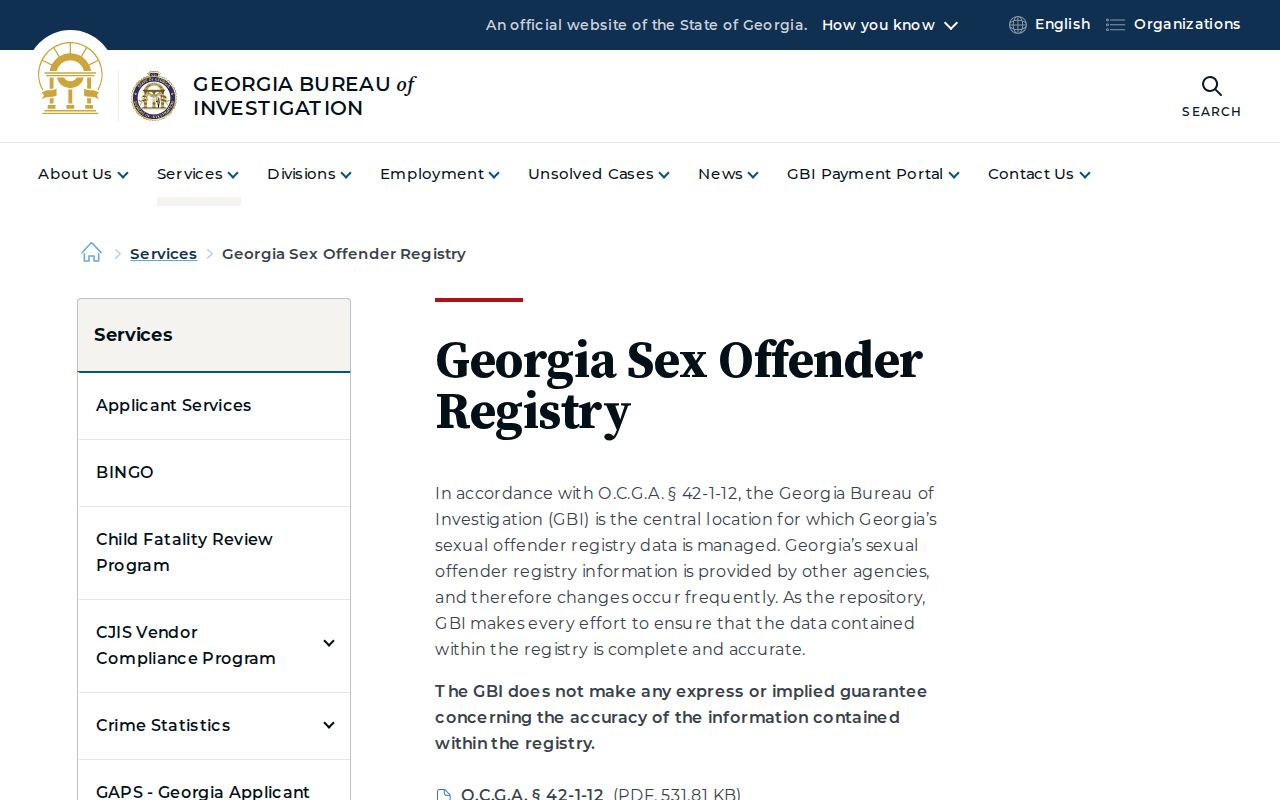
The state entry page keeps the search tied to official conditions and current Georgia data.
How to Search the Georgia Sex Offender Registry
Begin with facts you already know. Avoid forcing a match from a similar name or photo. The post-gate interface can change, and the research did not retain a private profile merely to inventory every label. Use the person and geographic choices shown live. Broaden a spelling only after a precise search fails.
- Open the GBI registry, read the conditions, and choose “I agree” only if the terms are acceptable.
- Select the available person or geographic method. Enter only known facts, such as a name or Wheeler County location.
- Compare aliases, physical details, and location data. Do not treat a close spelling as proof of identity.
- Open a matching profile, check verification and compliance fields, then confirm a suspected error with the sheriff.
| Field Label | Type | Required | Notes |
|---|---|---|---|
| Person search | Live form | Method dependent | Use known name facts and review aliases. |
| Geographic search | Live form or map | Method dependent | Use Wheeler County, Alamo, Glenwood, or another displayed location choice. |
| Result identity | Profile match | Yes for reliance | Compare photo, description, aliases, and conviction data. |
| Update status | Profile field | No | Read verification and compliance indicators before drawing a conclusion. |
Missing Wheeler Registry Results
A missing name has several possible explanations. The offense may not qualify, a new record may not yet have reached the public database, a successful First Offender disposition may apply, the person may be deceased and deleted, or the search terms may be wrong. A recent move also creates a timing issue. None of these can be resolved by guessing.
Try known aliases and a broader geographic search. If another state is possible, use the U.S. Department of Justice's National Sex Offender Public Website. NSOPW federates participating jurisdictions, while GBI remains the direct Georgia source. The national search is pictured below as a useful second channel.
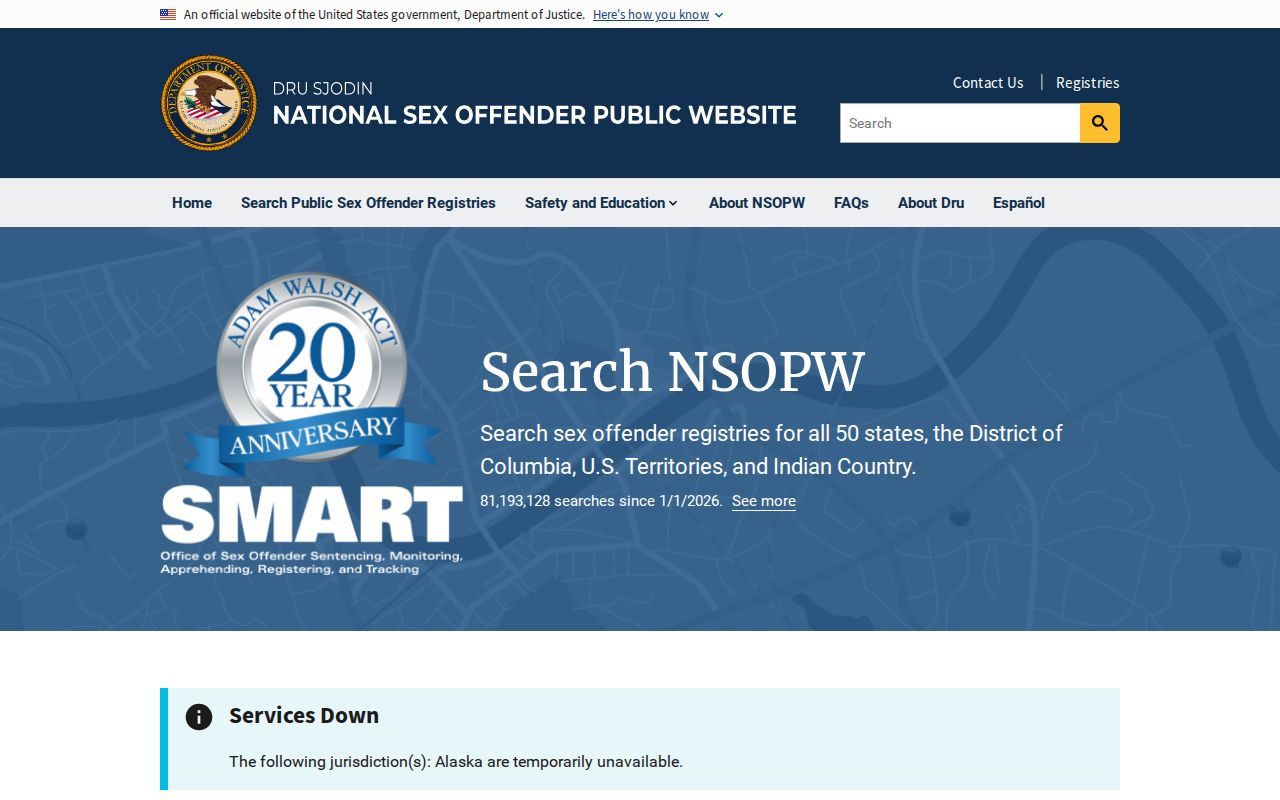
When both channels leave a material question, contact the residence-county sheriff instead of assuming that absence clears it up.
Inside a Registry Profile
Georgia law authorizes a defined public profile. Each field answers a narrow question. A photo helps with identity but can age. An address reflects registration data, not a guarantee of present location. Offense data describes the qualifying conviction and does not allege a new offense at the listed address.
| Name & Aliases | Legal and alternate names that help resolve spelling differences. |
|---|---|
| Photo & Description | Identity aids, including physical traits; appearances can change. |
| Registered Address | The residence or sleeping-location data supplied under registration law. |
| Offense & Conviction | Qualifying offense plus conviction date and jurisdiction. |
| Risk Classification | Georgia board assessment, not a federal duration tier or a prediction. |
| Registration Status | Verification, compliance, or absconder wording and relevant dates. |
Wheeler Registry Update Cycle
Timing has two parts. Wheeler County's sheriff receives local reports and submits updates within two business days. The state registry updates daily. Those schedules do not erase human reporting time. A registrant generally must report to the sheriff in the county of residence or sleeping location within 72 hours of release, placement, or entry into Georgia. Qualifying changes also carry a 72-hour reporting window.
Annual renewal occurs in person within the 72 hours before the registrant's birthday and includes a current photo and fingerprints. GDC and the State Board of Pardons and Paroles enter records within their roles, while GBI handles qualifying relocations from outside Georgia. Read the displayed update dates before treating an address as current.
Georgia Registration Levels and Requirements
Georgia uses Level I, Level II, and sexually dangerous predator risk classifications. They are not the federal SORNA tier-duration scheme. Registration is generally for life, excluding incarceration, unless a court or another lawful route ends the duty. The official text of O.C.G.A. § 42-1-12 governs the basic registration system. Sections 42-1-14, 42-1-15, and 42-1-19 address classification, restrictions, and removal.
| Georgia class | General duration | Key meaning |
|---|---|---|
| Level I | Generally lifetime unless lawfully removed | Board-assessed lower risk classification. |
| Level II | Generally lifetime unless lawfully removed | Board-assessed intermediate risk classification. |
| Sexually dangerous predator | Generally lifetime unless lawfully removed | Additional six-month reporting and GPS conditions may apply. |
Wheeler Registry Removal Petitions
Some people may petition for removal under Georgia law. The correct court can depend on where the conviction occurred and where the person resides. Some criteria require ten years after completion of custody and supervision. Service requirements also apply, and a denied petition generally cannot be repeated for two years.
This is a court process, not a profile-edit button. Anyone reviewing their own eligibility should read the current statute and obtain advice tailored to the conviction, sentence, residence, and classification. A Wheeler County registry search cannot decide eligibility or remove an entry.
Wheeler Sheriff Registration Office
The local starting point is the sheriff's administrative office. GBI can answer state-registry questions at 404-270-8399, with the general GBI line at 404-244-2600. Wheeler has not published separate registration hours, an appointment rule, or a local registry fee, so confirm the right time and contact before travel.
Wheeler County Sheriff
21 W Forest Avenue
Alamo, GA 30411
912-568-7151 or 912-568-7107
Call first for registration-office availability.
The official registry FAQ is pictured below and gives the state explanation of update and reporting rules.
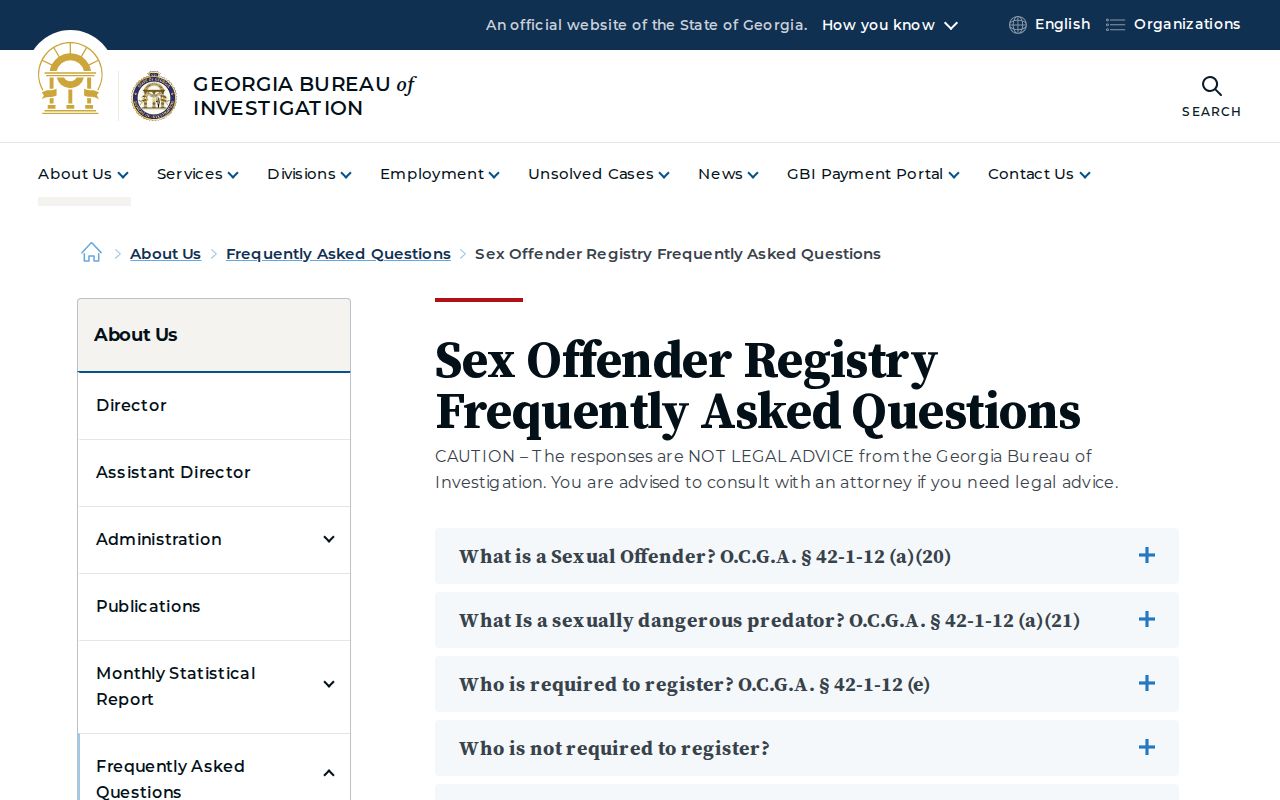
Use it to frame a question before calling the sheriff or GBI.
Registry Versus Custody Records
A registry profile is not an inmate locator. Current Wheeler jail custody must be checked with the county jail, while state prisoners appear in the Georgia Department of Corrections locator. Federal custody uses the Bureau of Prisons system. The BOP inmate locator pictured below answers a custody question, not Georgia registration status.
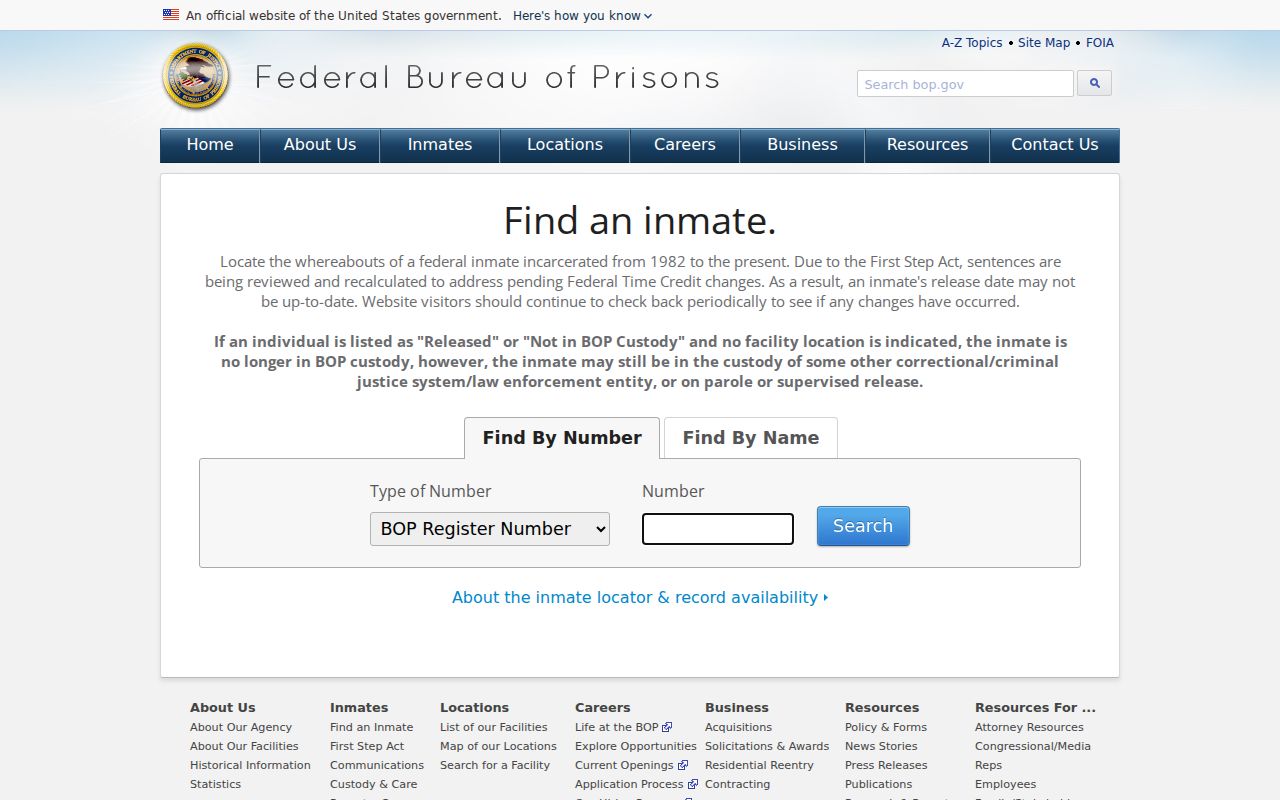
Use the registry for registration data and the correct jail or prison custodian for confinement data.
Community Notification and Lawful Use
Public registry information supports personal, family, and neighborhood safety. It can help residents check a known address, understand a public profile, and report a suspected error. It does not authorize confrontation. Confirm identity and current data with the originating agency before relying on a result.
Use registry data lawfully: Georgia registry information must not be used to threaten, harass, intimidate, or commit an unlawful act against a registrant or anyone in the household.